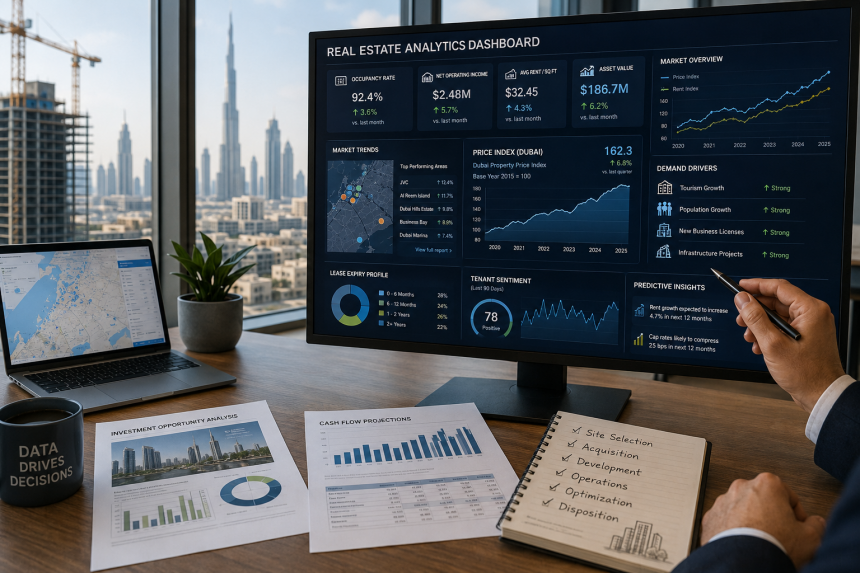
The global real estate industry is undergoing a profound transformation, moving away from a historical reliance on intuition and towards a future defined by data-driven intelligence. For decades, stakeholders relied on gut feelings or fragmented, stale information to guide high-stakes transactions. However, the integration of advanced real estate data analytics is closing this gap, allowing professionals to transition from debating static numbers to acting on real-time insights. This shift is particularly evident as firms move from consumption-based models to investment-driven strategies that prioritize long-term capital appreciation and operational efficiency. Today, analytics serves as the foundation for strategic decision-making across the entire property lifecycle, from initial site selection and acquisition to management and eventual sale.
Defining Real Estate Data Analytics
At its core, real estate data analytics is the process of collecting, integrating, and interpreting vast datasets to extract actionable insights about properties, markets, and tenants. This involves synthesizing traditional metrics, such as occupancy rates, rental income, and lease expirations, with non-traditional variables like foot traffic, social media sentiment, and consumer spending habits. The effectiveness of these analytical platforms relies on four key attributes: accuracy, recency, comprehensiveness, and actionability. By ensuring data reliably reflects real-world conditions, industry professionals can move beyond hunches to make evidence-based choices that compound in quality over time.
Revolutionizing Investment and Acquisition Strategies
Data analytics has transformed high-stakes investment from an educated guess into a strategy backed by comprehensive analysis. Investors now use predictive analytics to identify mispriced opportunities and emerging neighborhoods before market prices catch up to a property’s true potential. By combining traditional comparable sales with alternative data like new business openings and infrastructure projects, stakeholders can pinpoint areas with the highest potential returns while mitigating downside risks. This multi-dimensional view surfaces not only current performance but also future growth potential and operational risks that might otherwise remain hidden.
Furthermore, the accuracy of property valuations has improved significantly. Traditional methods relying on limited comparable sales were often incomplete. Today’s analytical approach provides a predictive picture that can forecast real estate values with high accuracy by analyzing variables like walkability scores and school ratings alongside financial metrics. Predictive models also allow investors to run scenario analyses, testing how changes in interest rates or rent growth assumptions will impact Net Operating Income (NOI) and Internal Rate of Return (IRR).
Optimizing Property Development and Site Selection
For developers, data analytics plays a critical role in site selection, project feasibility, and budget management. Analyzing parcel data within a jurisdiction helps identify land packaging opportunities and the rent premiums associated with different building designs. Historical project data is particularly actionable, helping development teams make smarter procurement decisions that lower the risk of future change orders. Visibility into real-time performance allows developers to detect budget overruns early and adjust strategies to protect shrinking margins. Advanced analytics also support the creation of detailed tenant mixes that suit a property’s profile and drive long-term profitability.
Enhancing Property Management and Tenant Retention
The operational phase of the real estate lifecycle benefits from analytics through revenue optimization and proactive maintenance. Property managers can now determine optimal rental prices in real-time by analyzing local market trends and competitor benchmarks. This reduces the risk of excessive vacancies or leaving potential revenue on the table. Additionally, tenant experience is refined through the analysis of usage patterns, feedback, and engagement levels. Early warning signs, such as rising complaints or declining foot traffic, can be addressed before they lead to costly turnover.
Predictive maintenance is another high-impact application. By connecting IoT sensors to building systems, managers can forecast equipment failures before they happen, shifting from reactive firefighting to planned repairs. This proactive approach reduces emergency repair costs, extends asset life, and significantly improves tenant satisfaction. Tracking utility usage and vendor costs further tightens forecasting accuracy and protects overall portfolio margins.
Market Insights and Global Trends: The Dubai Example
Global markets are increasingly adopting standardized indices to provide transparency for investors. In the Middle East, for instance, tools like the Dubai property price index provide critical intelligence by tracking average price changes and market shifts over various timeframes. Data indicates significant growth in cities like Dubai and Abu Dhabi, where prices per square foot remain high compared to emerging hubs. Monitoring these indicators allows investors to benchmark assets against regional performance and identify high-activity micro-markets, such as Jumeirah Village Circle (JVC) or Al Reem Island, where demand remains resilient.
Challenges and the Road Ahead
Despite its benefits, the adoption of data analytics faces hurdles, including the high cost of in-house development and a notable skill gap among professionals who must interpret complex insights. Many firms currently outsource these tasks as needs arise rather than building internal capabilities. Furthermore, shifting to a truly data-driven organization requires significant cultural change and a commitment to integrating fragmented legacy systems into a unified analytical layer. Looking forward, the integration of AI, machine learning, and blockchain technology is expected to enhance transparency and further refine predictive models, making data an absolute necessity for remaining competitive in the modern real estate landscape.
Frequently Asked Questions
How does data analytics support ESG and sustainability goals in real estate?
Data analytics allows stakeholders to measure carbon footprints and predict the long-term environmental impacts of property investments. It supports planning for certifications like LEED or WELL by providing measurable insights into energy usage and sustainability metrics.
What are the specific challenges small firms face when adopting real estate analytics?
Small firms often struggle with the high costs of developing in-house analytical capabilities and a limited range of specialized applications for their scale. Most smaller firms currently outsource these tasks to consultants as specific needs arise.
How can alternative data improve property valuation beyond standard variables?
While standard variables can predict values with roughly 40% accuracy, the inclusion of alternative data, significantly boosts this accuracy by providing a clearer picture of consumer sentiment and area desirability.
What role do IoT sensors play in reducing operational costs?
IoT sensors monitor critical building systems like HVAC and elevators, sending real-time alerts for malfunctions. This enables predictive maintenance, which prevents costly equipment failures and reduces emergency repair expenditures.
Can data analytics help in identifying the ‘right’ tenant mix for commercial properties?
Yes, by analyzing demographic data, consumer preferences, and visitation trends, professionals can align property offerings with local demand spikes. This strategic selection improves tenant retention rates and reduces the time properties spend vacant.
How does ‘Velocity’ of data impact high-stakes decision-making?
In fast-paced markets, the speed at which data is gathered (velocity) is often more important than its volume. Real-time gathering ensures that insights remain relevant and recent, allowing investors to move faster than the market during periods of volatility.